Coming Full Circle with Kasper Kruse


For the past few years, Kasper Kruse has been the director of The Animation Workshop in Viborg. It has been a very dynamic time at the school, in the industry, and in animation as a whole. We recently spoke with Kasper, learning more about his animation career, coming full circle back to Viborg, and his hopes for the future of TAW and Danish animation.
WA: Tell us a bit about your background in animation
KK: I was born and raised just south of Viborg, and I was interested in drawing and comics from a very early age. As I got older, of course, I was told that I couldn’t make a living as a comic book artist. In the 9th grade I interned at Den Blå Bil, a comics studio, and some of the people who are big names today worked there, like Henrik Rehr, Morten Hesseldahl, Rune Fleischer, and Bjarne Hansen. So I got a sneak peek at actually living and working as a comic artist, but the fact was that they also had a retail store out front to help make ends meet.
In the 80s, the animation industry in Denmark was tiny. But when the movie Valhalla came out in 1986, and then The Simpsons came on TV, you started to see things happening. A. Film started up, The Animation Workshop opened, and I met Morten Thorning. So I started to get interested in an animation career.
Also in the late 80s, there were something like 300,000 unemployed young people in Denmark, and nobody could figure out what to do about it. So they started a program where you could take a course, and at the end of the course you qualified for social benefits. All the municipalities came up with all kinds of courses, crazy courses, so that you could participate in the program and transition to benefit funding.
I think a lot of creative people my age were able to use that system to figure out what they really wanted to do, or to refine their art or music, or study theater or whatever. It was a big boost to art and creativity, and in that sense it was really good. Because of it, I took the one-year course at TAW, which shaped the course of my whole career.
After that I moved to Copenhagen, where the Danish Film School offered a degree in animation. It was a very limited program that only accepted 6 students every 2 years. I applied to the program, and I made it all the way to the very final interview. I was told that only 4 applicants had made it that far, so I really felt that, even though I had one more interview to go, I was already in.
This (the rejection from The National Film School in Copenhagen) became one of my biggest and most important life lessons. I still think about it… perhaps not daily, but quite often. I went into this interview absolutely certain that I would be accepted, and so full of myself, that I was a complete asshole. I acted like an absolute caricature of an auteur, speaking about myself as though I had already made all these very important features, as though I had already changed the history of film. So I was very surprised afterward when I received a letter saying that I had not been accepted. I learned a very important lesson from that, and it forced me to become a more humble and reflective person at a very young age.Kasper Kruse

After that rejection, I worked as a freelancer, primarily in illustration, although I still did some comics. I also did some tiny animation jobs: not for films, but the internet was growing, and people wanted little animations for CD-Roms and little games and things. At the next enrollment period, I was too embarrassed to reapply for the film school, but by ‘98 I had shed my humiliation and reapplied, and I got in that time. So I went to The Danish Film School, and graduated as a Director of Animation in 2002.
After that I was very serious about being an animation director. I had a little studio, together with Sara Koppel and Christian Kuntz. Christian and I had worked together on my final project at the Film School and we wanted to do features… But then reality hits. It’s just very very difficult to finance a feature, and there are only a couple animated features that get DFI funding every year. Christian and I got work as storyboarders on The Ugly Duckling and Me, and Christian could find freelance work as an animator. But for myself as a director, it was extremely tough. I did a few title sequences, LEGO stuff, that kind of thing.
Then I became a father for the first time. When you have a child you are really looking at a totally different economy, and I had to find a way to make things more sustainable. I was very lucky that one of my good friends had just been made Creative CEO of a company that wanted to revolutionize e-learning. My friend had been doing computer games, and he pitched some ideas around gamification of learning, and convinced Maersk, Vestas, and some other big companies to invest in it. So we had these huge budgets to do real proper animation, and develop proper gaming solutions, and I could build a studio and make a nice living there. That ended up becoming the vast majority of my professional animation experience, in the applied animation and e-learning industry.
After a while, my then-wife was finishing her education at The Animation Workshop, so we moved back to Viborg. Of course I had visited Viborg over the years to see my parents, and kept in touch with Morten Thorning and other people from TAW, but the plan was to stay for a year or two and then move back to Copenhagen. The plan was never to stay in Viborg. But what I realized once I had moved back was that the whole environment here is just vibrant and inspirational, and there are so many things happening.

Kasper reading "Get Naked" is an Eisner-nominated anthology by Steve Seagle
— one of the creators behind Ben 10 — who teaches as an external instructor here.
He used graduates and students from Graphic Storytelling to draw the individual episodes.
Weirdly, in Viborg, I felt closer to the whole international animation community. We have so many people attending the school from all over, and all the guest teachers coming in, and you hear all the languages being spoken, and everything going on at Arsenalet, and it feels so dynamic.Kasper Kruse
Then I was offered a job at a marketing agency that I had been working with. They offered to make me head of a department, and to cross-train and upskill me… To be honest, I had never been attracted to the idea of working for someone else. I had big issues with authority, and one of the main reasons I had become an entrepreneur was to be my own boss, and to try to be as good a boss as possible to the people who worked for me. So I was torn. But they offered me a three-month trial period, so I had nothing to lose. So I decided to try it, and I ended up staying there for a couple years.
A couple years later, when I had a new relationship and a new baby, the logistics of commuting to that job became too difficult. I wanted to try to better balance work and home. And I thought that if I started my own company again, it would really be a lot of work, and I couldn’t get better life balance that way. So I was really lucky that a position came up at the municipality in Viborg, as the project manager for Viborg Municipality’s animation strategy, which gave me a very easy path into the whole public sector. It was another thing I had never before considered doing. Eventually the municipality placed me at Arsenalet, where my boss wanted me to help organize things there.
WA: You’re describing a career that covers everything that most animators do at one time or another: freelance, online, little games, education, title sequences… it’s not thought of as a typical animation career path, and yet it’s a very common experience.
KK: In my animation career I’ve done all these different things, many of which were frowned upon. It was frowned upon to work in applied animation, it was frowned upon to work in the public sector.

Various illustrations and comics made by Kasper throughout his career.
But I have always needed to support my family, and been motivated by the desire to make a difference. The education I got when I did that horrible interview at the film school, where I realized that I need to have a more humble approach to the world, has really shaped my career. I definitely have a big ego, but I needed to learn when to bring it into play. I only bring it into play when it’s absolutely necessary, when there’s a clear purpose for it. But the main goal is really to make a difference. I know it sounds like a cliché, but I really am driven by purpose and by my values, and by trying to make the world a better place.Kasper Kruse
I think a lot of people in animation, even though it’s a cutthroat industry, are very caring and very kind. We have this common love of animation, and we can get very interested in tiny details, like whether you use an HB or a 2B when you’re sketching, and being fascinated by looking at the work of other people. When I was working with Christian Kuntz, we were still working on paper, and there’s the sheer joy of taking one of his scenes and flipping through it. His keys are incredible, and you can see the timing just by flipping through it… I’m getting goosebumps just talking about it. And it’s so nerdy but it’s also so wonderful.
WA: From there, you became Director of The Animation Workshop.
Yes, there were a lot of changes at The Animation Workshop, so I got the job as director here. I actually just celebrated my six year anniversary, since I started in June of 2020. It was so weird, because my whole career began by meeting Morten and going to the workshops, and then coming full circle. It was really emotional.
Since I’ve been here, I’ve focused on making the organization more professional. The Animation Workshop was always professional in the education, but we needed some work on “the boring aspects” of the school. We needed to take care of the compliance and balance the economy, all the administrative stuff that is necessary in order to have the freedom of creativity in the classroom. So we have rearranged things to be more in sync with compliance, and created more structures around salary negotiations and competence development, and that kind of thing.
But aside from all the things that happened internally, there are a few things that people may notice externally. For example, we now have more internal faculty, in addition to all of our guest teachers. It used to be that 80% of the teaching was from guest teachers, but now it’s more like 50/50. One of the big reasons is that we weren’t building as much institutional knowledge as we could, and we wanted to retain more of that knowledge within the school. So we started focusing on research and development, in order to build our own knowledge base. This is especially important right now, when there is so much rapid change in the industry.
WA: What lies ahead for you and for The Animation Workshop?
KK: Looking into the future… it’s the million dollar question, isn’t it? I wish I had a crystal ball to give you the answer. And if I could predict how everything would turn out in the next couple of years, I would quit TAW and start a company and get rich off my insight.

Ultimately, we have to be relevant for the industry. That’s our core assignment: to prepare students to enter the film industry or the game industry. So we are trying all the time to understand what is going to happen, and we are talking a lot with the animation industry, as well as with colleagues at other educational institutions.Kasper Kruse
Clearly, what's top of mind right now is how generative AI will influence animation. It's still very hard to know where things will land. At the moment, we're primarily exploring the possibilities, trying to understand the implications, and staying in very close contact with industry partners. At the same time, we're developing a set of principles to guide our approach, so that our decisions are based on critical reflection and long-term considerations, rather than reacting to the latest headline.
Animation and technology have always gone hand-in-hand, and animation people are very interested in technological changes and advances. But today we see so much rage and fear, which makes it hard to have the proper conversation.
We need to find out how to talk productively about the future. At the moment it’s kind of difficult to have a good debate about AI, because it’s very divisive. But I am not that pessimistic. I believe that the fundamentals of animation: the ability to draw and to understand composition, color, staging, timing, storytelling… I have a hard time thinking that these skills will disappear and will not be in demand. But we have to consider how it might change the education here at TAW, and include more entrepreneurship. I think entrepreneurship matters a lot, because some people, when a door closes, only see a closed door. When someone is a bit entrepreneurial, they are able to look for another door that is open. It limits your fear and panic, because you are also a little bit curious.Kasper Kruse

I think new ways of financing projects, finding new markets, engaging with an audience, that kind of thing, will add to how the industry will develop. I also think that we should talk about how we define originality, creativity, craft and so forth, to find out what is undeniable human competencies and what could possibly be handled by an AI.
The future I have no interest in is the kind of society in WALL-E, where humans have degenerated into having very short fingers because they never use them, and robots handle everything. We can do better than that.

Text: Rebekah Villon and WeAnimate
Photo: Adam Liebach
Keep in touch with The Animation Workshop
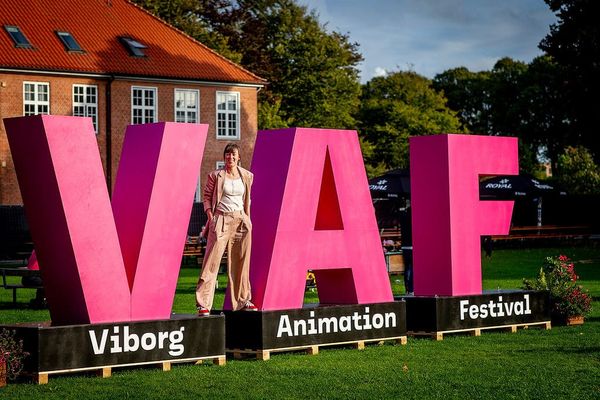
and catch up with Kasper this fall at VAF.
wam#0080